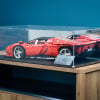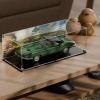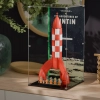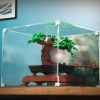
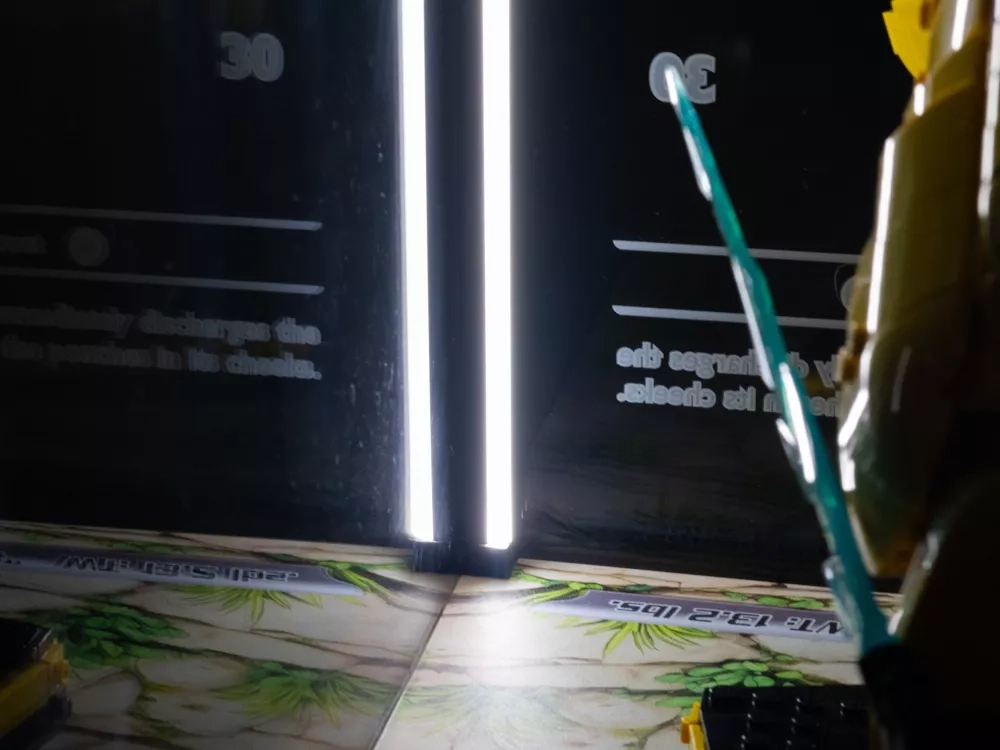
Good LEGO LED lighting does more than brighten a shelf. It transforms a collection into something that looks deliberate, gallery-quality and genuinely impressive, whether you have a single statement set or an entire room dedicated to bricks.
The right light pulls out the details that make a set worth displaying: the texture of LEGO botanicals, the glow of a Star Wars diorama, the architectural lines of a landmark build. The wrong light washes everything flat or, worse, causes gradual damage to the ABS plastic over time.
This guide covers everything you need to know about LEGO display lighting: the types of lighting available, how to choose the right colour temperature, the difference between USB and battery-powered kits, and practical advice for specific set types. Whether you are lighting a single display case or an entire shelving wall, you will find a clear path through the options here.
Why lighting transforms a LEGO display
Most LEGO sets are designed with detail in mind. Tiny minifigure faces, printed tile textures, translucent elements intended to catch the light. Under standard room lighting, most of that detail disappears into visual noise.
Targeted LEGO display lighting changes that dynamic. Even a modest warm-white LED strip placed inside a LEGO display case will immediately create contrast, depth and a sense of intentional presentation.
There is also a practical argument. Halogen bulbs emit ultraviolet radiation, and both incandescent and halogen bulbs produce significant heat. Over months and years, either can degrade ABS plastic: colours fade, structural integrity weakens. LEDs emit no meaningful UV and produce minimal heat, making them the only safe long-term choice for a permanent display. Their rated lifespan of 25,000 to 50,000 hours of continuous use means a well-chosen LED setup will outlast the display it illuminates.
The difference between a shelf of sets and a curated collection often comes down to lighting. It costs very little to get right.
Types of LEGO LED lighting
There is no single best type of LEGO LED lighting. The right choice depends on whether you want ambient illumination across a whole shelf, focused light on one statement set, or a background effect that enhances the entire display area.
LED strip lights
LED strip lights are the most versatile option for LEGO cabinet lighting. They are thin, adhesive-backed flexible ribbons of LEDs that can be cut to length and mounted along the top or bottom edge of a shelf, inside the top of a cabinet, or around the perimeter of a display unit.
For shelved collections in large LEGO display cases, strips mounted along the front top edge of each shelf provide even, downward-facing illumination that lights the sets below without creating harsh shadows. For wall-mounted display cases, a single strip along the top interior is often sufficient.
Key things to look for in LED strips for LEGO displays:
- CRI (Colour Rendering Index) of 90+. A higher CRI means colours are reproduced more accurately. Lower CRI strips make reds look orange and yellows look green.
- Dimmable output. The goal is a gentle ambient glow, not a spotlight. Dimmability gives you control.
- Appropriate colour temperature. More on this below.
Density matters too. Strips sold in dots-per-metre ratings: a higher density (60+ LEDs per metre) produces smoother, more even light with fewer visible hotspots.
Puck lights and spotlights
Puck lights are small, disc-shaped lights designed to throw a focused beam on a specific point. Spotlights do the same from a greater distance. Both are better suited to highlighting a single set than to illuminating a full shelf.
For a collector with one or two centrepiece sets, a small spotlight angled at a Millennium Falcon or a large architectural set can work extremely well. The directional light creates dramatic shadows that emphasise the three-dimensional structure of the build.
They are less practical for collections with many sets at different heights or depths. For that use case, strip lighting gives more consistent results.
Bias lighting
Bias lighting is a technique borrowed from home cinema: place a light source behind the display (behind the cabinet itself, or behind a mounted panel of sets) rather than inside it. The light projects outward onto the wall, creating a halo effect.
The benefits are twofold. First, the contrast between the lit collection and the glowing background makes colours appear more vivid and saturated. Second, research from the display industry suggests bias lighting reduces eye strain during extended viewing by reducing the contrast ratio between the bright screen (or display) and the dark surrounding room.
For LEGO, bias lighting works particularly well behind sets with dramatic silhouettes: Charizard, the Eiffel Tower, Hogwarts, or any set with interesting outlines. An RGB strip behind the case set to a deep blue or amber creates an immediate premium look with minimal effort.
Choosing the right colour temperature
Colour temperature is measured in Kelvin (K). Lower numbers are warm and orange-tinted; higher numbers are cool and blue-tinted. For a LEGO display, getting this right is arguably more important than the type of light you choose.
Here is a practical guide:
- Warm white (2700-3000K): This replicates the colour of incandescent bulbs. It flatters natural materials, earth tones and vintage aesthetics. It works well with LEGO Botanical Collection sets (flower bouquets, succulents, orchids), medieval castle builds, and heritage landmark sets like the Notre-Dame Cathedral or the Colosseum. The warmth adds richness to brown, tan, green and dark red bricks.
- Neutral white (3500-4100K): The balanced option that suits most modern LEGO sets. Neither warm nor cool, it reproduces colours accurately without imposing a tint. A good default if your collection spans multiple themes and you want one lighting colour temperature to work across all of it. Well suited to City sets, Creator builds and Architecture sets.
- Cool white (5000K and above): Blue-shifted light that suits futuristic, industrial and technological aesthetics. It is the right choice for LEGO Technic models, space-themed sets, and any build with a lot of grey, silver, translucent blue or white. It amplifies the technical, precision feel of these sets.
This is one of the most overlooked aspects of LEGO display lighting. Two collectors can have identical sets in identical cases, but the one who chose the right colour temperature will have a noticeably more impressive result.
USB vs battery-powered lighting
Most LEGO-compatible LED kits and general-purpose LED strips are available in either USB-powered or battery-powered variants. The right choice depends on how your display is set up.
USB-powered lighting is the better option for permanent displays. It provides consistent, uninterrupted power, requires no battery changes, and is more cost-effective over time. If your display case or shelving unit is near a plug socket or you are comfortable running a cable to a USB port or mains adapter, USB power is the practical choice. For built-in cabinet lighting in a dedicated display room, USB or mains-wired strips are standard.
Battery-powered lighting is better for portable or temporary setups: a set displayed on a table at an event, a movable acrylic case, or a display you rotate through different positions. The trade-off is that battery-powered kits require regular replacement or recharging, and output can dim as batteries deplete.
For most collectors with a fixed shelf or display case, USB power is the right answer. For a standalone acrylic display case you move between rooms or take to events, battery-powered gives you the flexibility you need.
LEGO LED lighting kit brands compared
Several brands specialise specifically in LEGO-compatible lighting kits: individual lights designed to fit inside specific sets, illuminating particular elements like windows, engines or light-up signage. These are distinct from general LED strip lighting and work at the brick level.
Here is a factual overview of the main brands available in the UK:
Light My Bricks
One of the most established names in the LEGO lighting kit market. They produce set-specific kits with pre-cut cable lengths and named connectors designed for particular builds. They have a broad catalogue covering popular sets across multiple themes and supply both individual components and full kits. Based in Australia with UK shipping available.
Lightailing
A widely available brand on UK and European marketplaces, offering set-specific kits at a variety of price points. Their kits include USB-powered options and typically contain all necessary components for a named set. Good availability on Amazon UK.
Brick Bling
A widely available LEGO lighting brand offering set-specific kits and individual components. They sell through Amazon UK and other UK marketplaces, making them straightforward to order from within the UK.
Bright My Bricks
Produces set-specific lighting kits with a catalogue focused on popular Creator Expert and Icons sets. They sell individual LED components as well as full kits, which is useful if you want to customise or expand a build beyond the standard kit.
Lighting tips by set type
Different LEGO themes benefit from different LEGO lighting ideas. Here is a practical breakdown by set type.
Landmarks and Architecture sets (Eiffel Tower, Empire State Building, Notre-Dame)
These sets have strong vertical lines and intricate surface detail. Neutral to warm white lighting from below or at a slight angle creates upward-facing shadows that emphasise height and structure. Bias lighting behind the case adds drama for tall landmark sets.
LEGO Botanical Collection (Flower Bouquet, Succulents, Orchid, Dried Flower Centrepiece)
Warm white at 2700-3000K is the natural fit. It mimics the quality of natural light in a sunny room and makes greens, pinks and yellows appear rich rather than harsh. Avoid cool white here; it gives botanicals a clinical, artificial look.
Star Wars sets (Millennium Falcon, AT-AT, dioramas, helmet display sets)
Cool to neutral white works well for the space aesthetic. Bias lighting in deep blue creates an immersive spacefaring backdrop. For helmet display sets on individual stands, a single puck light from above creates museum-quality presentation.
Vehicles and Technic (Bugatti Chiron, Lamborghini, heavy plant machinery)
Cool white at 5000K suits the precision engineering aesthetic. It makes chrome, silver and dark grey bricks look crisp and high-specification. Strip lighting along the top edge of the shelf with a slight forward angle illuminates bodywork texture effectively.
Creator and Icons sets (Corner Garage, Bookshop, Medieval Town Square)
Warm to neutral white. These sets are detail-rich and benefit from gentle ambient light rather than directional spotlighting. A strip along the top of each shelf produces consistent illumination across a whole row of modular buildings.
How display cases affect lighting
The enclosure around your LEGO sets has a significant effect on how lighting performs. An open shelf dissipates light in every direction; a closed display case concentrates it.
A closed display case with transparent acrylic or glass panels contains the light within the display volume. This means a lower-power LED strip produces a brighter, more concentrated result than the same strip on an open shelf. Light reflects off the interior surfaces, filling the space more evenly and reducing dark corners.
For acrylic display cases, the material itself has a slight light-transmitting quality: with bias lighting behind an acrylic case, the edges of the panels can catch and diffuse the light in a way that glass does not, creating a subtle halo around the case itself.
Wall-mounted display cases offer a particular advantage for bias lighting: the mounting hardware creates natural stand-off from the wall, giving you space to run an LED strip behind the case without it being visible from the front.
If you are planning a display build from scratch and want lighting to be a central part of the result, choosing a closed case is worth the investment. The lighting efficiency gains alone make a meaningful difference to the final look.
FAQ
Will LED lighting damage my LEGO sets?
No. LEDs emit no ultraviolet radiation and produce minimal heat, making them safe for long-term use with ABS plastic. It is incandescent bulbs and halogen spotlights that cause ABS degradation through UV exposure and heat. LED lifespan is typically 25,000 to 50,000 hours of continuous use, so a well-chosen setup will serve your display for many years without any risk to the sets.
What colour temperature should I use for a mixed LEGO collection?
Neutral white at 3500-4000K is the most practical choice for a mixed collection. It sits between warm and cool, reproduces colours accurately without imposing a tint, and works reasonably well across City, Creator, Technic and most theme-based sets. If you have dedicated shelves per theme, matching the colour temperature to the theme (warm for botanicals and landmarks, cool for Technic and space) gives a noticeably better result.
What is the difference between LED strip lights and LEGO lighting kits?
LED strip lights are general-purpose lights you add to your display case or shelving unit to illuminate the whole display from the outside. LEGO lighting kits (from brands like Light My Bricks or Lightailing) are set-specific products designed to fit inside individual LEGO builds, lighting specific elements like windows, engines or signage from within the set. Many collectors use both: strip lighting for the overall display, brick-level kits for hero sets.
Is USB or battery power better for LEGO display lighting?
USB-powered lighting is better for permanent displays. It provides consistent power with no ongoing maintenance and is more cost-effective over time. Battery-powered lighting is better for portable or temporary setups where running a cable is not practical. For most fixed shelf or cabinet displays, USB power is the right choice.
What is bias lighting and is it worth doing?
Bias lighting means placing a light source behind the display unit rather than inside it, projecting light onto the wall behind. It creates a halo effect that makes colours appear more vivid and reduces eye strain when viewing the display for extended periods. It works particularly well behind sets with strong silhouettes. An RGB LED strip behind a display case is a low-cost way to achieve the effect and makes a significant visual difference.
Can I use the same LED strips for all my display cases?
Generally yes, provided you choose the right colour temperature for your collection. Standard 12V or USB-powered LED strips can be cut to length, so one continuous strip can be divided to light multiple shelves or cases. If your cases are at different locations in the room, using a multi-output USB hub means you can power several strips from a single socket.
Build the display your collection deserves
Good LEGO LED lighting is one of the highest-impact, lowest-cost upgrades you can make to a LEGO display. A well-chosen LED strip at the right colour temperature, mounted inside a quality display case, transforms a shelf of sets into a collection that looks considered and impressive.
If you are still choosing the right case for your collection, browse the full range of LEGO display cases and cabinets at Boxxco. For sets that need individual presentation, acrylic display cases offer a clean, minimalist option that works well with internal and bias lighting.
For larger collections, the large LEGO display cases range includes formats designed for full shelving builds. Whatever the scale of your display, getting the lighting right is the step that ties it all together.
For protecting your collection beyond lighting, see our guide on how to keep your LEGO sets dust-free.
Ready to start building your display? Get in touch with the team at Boxxco for advice on cases, sizing and setup.
Browse BOXXCO display cases