Every year, LEGO retires hundreds of sets. Once a set is discontinued, the price on the secondary market typically rises. Some sets double or triple in value within a few years of retirement. Others become genuinely scarce. For collectors who bought ahead of retirement, or who are now watching the retirement lists, the question is not whether these sets are worth keeping, but how to keep them in the best possible condition.
Whether you want to display a retiring LEGO set prominently or preserve it sealed for the long term, the decisions you make now have a direct impact on condition and value. This guide covers the 2026 retirement picture, the display versus seal debate, and the practical preservation methods that protect both open-built and boxed sets for years to come.
LEGO Retiring Sets 2026: What You Need to Know
LEGO retires sets on a rolling basis throughout the year, but two dates dominate the 2026 lego retiring sets calendar.
31 July 2026 is the largest single retirement date, with over 130 sets confirmed as retiring. These span almost every theme and price point: City, Star Wars, Harry Potter, Technic, Creator and the Icons range all have significant retirements at this date. If a set on your want list carries a July 2026 retirement, the window to buy at retail price is already closing. The full picture of lego sets retiring 2026 is broader than most collectors expect until they start looking at it seriously.
31 December 2026 brings further retirements, most notably the LEGO Icons Eiffel Tower (10307), the largest set by piece count in the Icons range at 10,001 pieces. The Eiffel Tower has been a flagship display piece since its 2022 launch and is unlikely to be reissued in the same form. Its retirement at the end of 2026 makes it one of the most significant lego discontinued sets of the year.
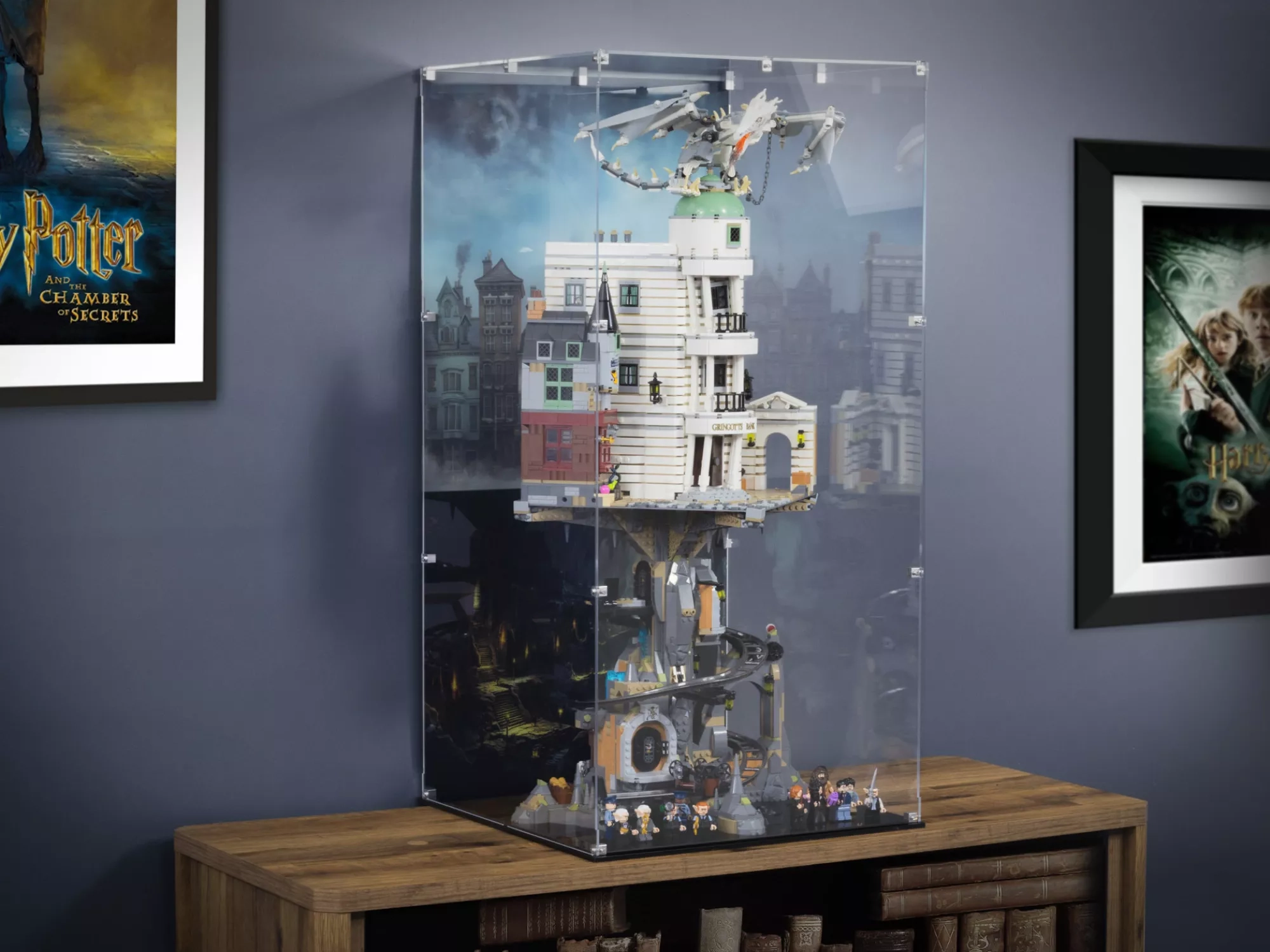
Other notable retirements before the end of 2026 include the Gringotts Wizarding Bank Collectors Edition (76417) in July. At 4,803 pieces and one of the most detailed Harry Potter sets ever produced, this is a set that many collectors will want to protect properly once it leaves retail. If you are tracking lego retiring soon across multiple themes, the July 2026 date is where the most urgent decisions concentrate.
The key point for any collector is this: a set in poor condition at retirement is worth significantly less than one in pristine condition. The difference between a set displayed openly on a dusty shelf and one stored in a sealed case can be a meaningful gap in resale or collection value within three to five years.
Should You Display or Seal a Retiring LEGO Set?
This is the central question most collectors face, and the answer is not the same for every set.
The case for displaying: A LEGO set kept in a box is not being enjoyed. For many collectors, the purpose of the set is the build and the display. A set like the Eiffel Tower or the Gringotts Bank is a genuinely impressive object; keeping it in a box removes the point of owning it. Display and condition are not mutually exclusive if you protect the set correctly.
The case for sealing: A factory-sealed set in its original, undamaged box commands the highest possible secondary market value. A set that has been built, displayed and then disassembled into the original box has lower value than one never opened. If your primary interest is long-term investment return, a sealed set is the correct choice.
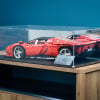
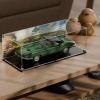
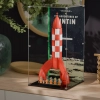
The middle path: A built set displayed in a sealed acrylic case sits between these two positions. It can be seen and appreciated, it retains its position as a display object, but it is protected from dust, UV exposure and handling damage to a standard that closely approaches a sealed box in terms of condition preservation. For the majority of serious collectors, this is the most satisfying approach — and it is the basis of most thinking around sealed lego sets investment value.
How to Display Retiring Sets Safely
If you are displaying a built retiring set, three environmental factors determine condition over time: UV exposure, dust accumulation, and temperature and humidity stability.
UV Exposure
ABS plastic, the material LEGO bricks are made from, is susceptible to UV-induced yellowing. The process is gradual but irreversible. White and light grey bricks are most vulnerable. Printed tiles fade under sustained UV exposure. Translucent elements can discolour.
The practical rules for UV protection:
- Keep displayed sets away from windows and direct daylight
- Do not display under halogen or incandescent spotlights, both of which emit UV
- Use LED lighting only for display illumination: LEDs produce no meaningful UV output
- A UV-filtering display case provides the strongest protection for permanent display positions
Optimal storage and display temperature is 15–25°C, with 40–50% relative humidity. Avoid garages, lofts, and rooms with significant temperature swings: these accelerate ABS degradation regardless of UV exposure.
Dust
Dust on an open displayed set is more than cosmetic. Fine particulate matter settles into the gaps between bricks and studs. Once embedded, it is difficult to remove without risking damage. On a set intended to retain its value, any cleaning process carries risk.
An enclosed display case eliminates this problem entirely. A LEGO display case with sealed panels keeps dust out for the full display life of the set. If you are displaying open on a shelf, a weekly light pass with a soft dry brush is the minimum maintenance to prevent accumulation. Our full guide on keeping LEGO sets dust-free covers tools and technique in detail.
Handling
Every time a built set is handled, stress is placed on connections. Repeated handling of a large, heavy set like the Eiffel Tower or the Gringotts Bank is the primary cause of element loss and structural fatigue. The fewer times a valuable set needs to be moved, the better. A purpose-built LEGO display case eliminates casual handling entirely: the set is visible without needing to be touched.
How to Store Sealed Retiring Sets
A sealed set stored correctly can retain pristine condition indefinitely. The rules are straightforward but worth following precisely.
Keep the box flat and away from weight. LEGO boxes are not designed to bear stacking loads. Store sealed sets in a single layer on a shelf, or use properly spaced stacking with no more than two boxes high. Crushed or creased box corners reduce resale value measurably.
Control temperature and humidity. The same ranges apply as for displayed sets: 15–25°C and 40–50% relative humidity. Attic and garage storage almost always exceeds these ranges at some point in the year and should be avoided. A stable interior room is the right environment.
Keep boxes out of direct light. Even through cardboard, sustained UV exposure can affect the printing on box art over time. A dark shelf or enclosed cabinet is preferable to an open shelf in a bright room.
Do not unwrap internal bags. For sets you are keeping sealed, resist the temptation to open the box or remove element bags. Any opened packaging reduces the sealed premium.
Keep records. Note the purchase date, price paid, and storage location for each sealed set. This becomes relevant for insurance purposes and for tracking condition at a later sale. Understanding how to preserve lego sets in storage is not complicated, but it does require consistent attention to these basics over the years a set is held.
Frequently Asked Questions
Which LEGO sets are retiring in 2026?
Over 130 LEGO sets are confirmed as retiring on 31 July 2026, spanning themes including City, Star Wars, Harry Potter, Technic and Icons. The LEGO Icons Eiffel Tower (10307) retires on 31 December 2026. The Gringotts Wizarding Bank Collectors Edition (76417) retires in July 2026. LEGO updates its official retiring sets list regularly; checking the LEGO website directly gives the most current information.
Does a built LEGO set lose value after retirement?
Not necessarily, provided it is kept in excellent condition. The secondary market values built sets lower than factory-sealed sets, but a built set in pristine condition in a proper display case retains meaningful value. The condition premium is the key variable: a set that has been openly displayed for years without protection will be worth considerably less than one that has been cased and preserved.
How do I prevent my LEGO sets from yellowing?
Keep sets away from UV light sources: direct sunlight, halogen bulbs and incandescent spotlights all accelerate ABS yellowing. Use LED lighting only for display illumination. Maintain a stable temperature of 15–25°C and humidity of 40–50%. A UV-filtering closed display case provides the strongest long-term protection. Once yellowing has occurred, it cannot be reversed without chemical treatment (which carries its own risks), so prevention is the only practical approach.
Is it worth buying LEGO sets before they retire?
For sets with strong demand and no announced successor, buying before retirement at retail price is generally considered good value by the collector community. The most significant price rises typically occur in the first one to two years after a set retires, when retail supply is gone but demand from late collectors remains high.
What is the best way to store LEGO sets long-term?
For sealed sets: keep boxes flat on a stable shelf in a room maintained at 15–25°C and 40–50% humidity, away from direct light, with no significant stacking weight on top. For built sets: a closed display case at the same temperature and humidity ranges (15–25°C and 40–50%) provides the best protection. Avoid attics, garages and rooms with seasonal temperature swings. Never store sets directly on a concrete floor, where moisture can transfer through cardboard.
How do I dust a displayed LEGO set without damaging it?
Use a soft natural-bristle brush (a clean, dry make-up brush or soft-bristle paintbrush works well) with very light pressure. Work from top to bottom and from back to front. Do not use compressed air on detailed builds as it can dislodge small elements. A closed display case removes the need for routine dusting entirely. See our complete guide to keeping LEGO sets dust-free for a full toolkit and method.
Protect What You Have Built
The sets retiring in 2026 include some of LEGO's most impressive builds of the last five years. Whether you display them or keep them sealed, the condition you maintain them in now determines the value they hold in ten years.
A purpose-built LEGO display case is the most effective single investment you can make in the long-term condition of a built set. It eliminates the three main causes of condition loss — dust, UV and handling — in one step.